How to Choose the Right Unit
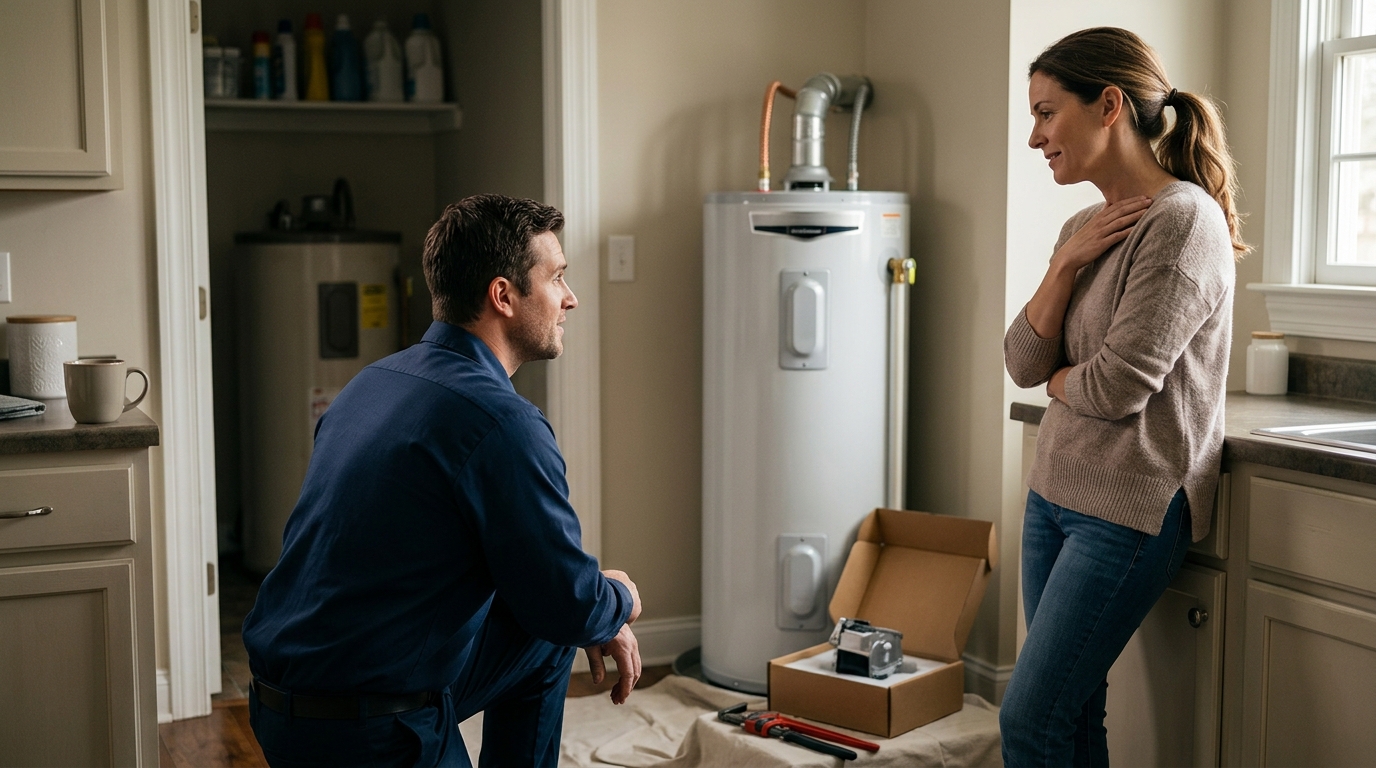
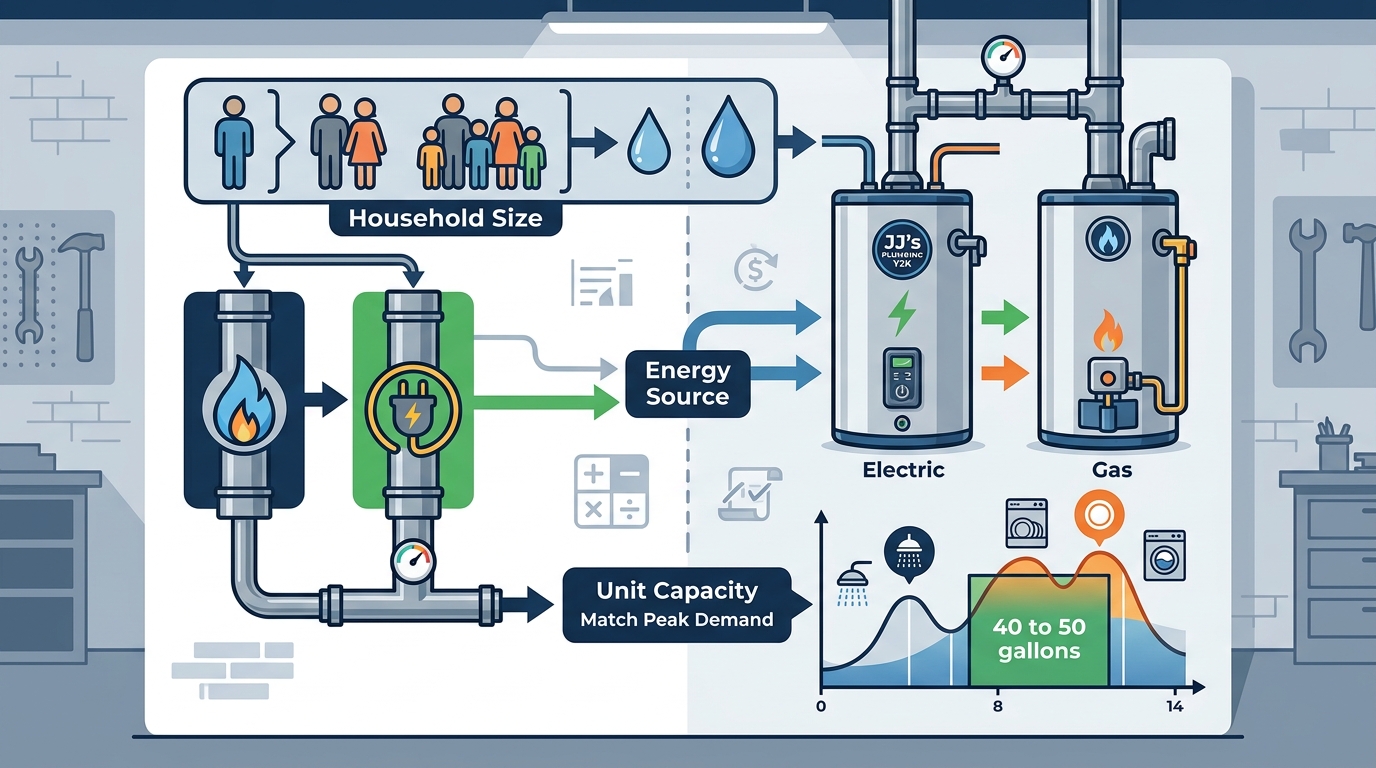
Choosing the correct water heater depends on your household size, energy source, and budget. A standard tank water heater is a storage-based system that keeps a fixed volume of water hot at all times. For most Winston-Salem homes, a 40 to 50-gallon gas or electric tank unit is the standard choice. You must match the unit's capacity to your peak demand. If you have a large family or multiple bathrooms, you may need a larger tank or a high-recovery unit. Electric units are generally cheaper to buy but more expensive to run. Gas units cost more upfront but have lower operating costs in North Carolina. Consider the Energy Factor (EF) rating, which measures efficiency. Higher EF units cost more but save money over time.
Capacity Calculation
Calculate your daily hot water usage. A typical person uses 50 to 100 gallons per day. Multiply this by the number of people in your home. Add a buffer for simultaneous use. If you have two showers running at once, you need a unit with a high first-hour rating. This metric tells you how much hot water the unit can deliver in the first hour of use. It is more important than tank size for busy households. For additional details, review the Plumbing Project Gallery JJ.
Energy Source Selection
Check if your home has gas lines or high-capacity electrical service. If you have gas, a gas water heater is usually the best value. If you do not have gas, an electric unit is the only option unless you install new gas lines, which adds significant cost. Tankless units can be gas or electric. Electric tankless units require heavy wiring, often 80 to 120 amps, which may require an electrical panel upgrade. For additional details, review the Privacy Policy JJ s.
Questions to Ask Before Committing
Scope of Work
Ask what is included in the installation. Does it include removing the old unit? Does it include disposing of the old unit? Does it include testing for leaks? Does it include flushing the system? These tasks are standard but should be explicit. Ask if the contractor will provide a written estimate. Verbal estimates are not binding and can change. A written quote protects you and the contractor.
Timeline and Access
Ask how long the job will take. A standard tank replacement takes 4 to 8 hours. A tankless installation can take 1 to 2 days. Ask if the work will be done in one day or multiple days. Ask about access to the unit. If the unit is in a tight crawlspace or attic, it may take longer. Ask if the contractor will protect your floors and furniture. Professional plumbers use drop cloths and shoe covers.
Verifying Contractor Credentials
License Verification
Go to the official state board website. Enter the contractor's license number. Check the status of the license. It should be active and in good standing. Check the expiration date. An expired license is a red flag. Check for any disciplinary actions. A clean record is essential. Do not hire an unlicensed plumber. It is illegal and risky.
Insurance Proof
Ask for a certificate of insurance. This document lists the types of coverage and the limits. Verify that the policy is current. Ask if the policy covers your specific address. Some policies have exclusions. Keep a copy of the certificate for your records. This protects you in case of damage or injury.
The Installation Process
The installation process follows a standard sequence. First, the plumber shuts off the water supply and gas or power. They drain the old tank. They disconnect the pipes and lines. They remove the old unit. They prepare the new location. They install the new unit. They connect the pipes and lines. They turn on the water and gas or power. They test for leaks. They flush the system. They dispose of the old unit. They clean up the work area. The entire process takes 4 to 8 hours for a tank unit. A tankless unit takes longer due to the complexity of the gas or electrical connections.
Pre-Installation Prep
The plumber will inspect the installation site. They check the floor for levelness. They check the wall for support. They check the gas line size. They check the electrical service. If any upgrades are needed, they will inform you before starting. This prevents delays. They will also check the venting for gas units. Proper venting is critical for safety.
Post-Installation Testing
After installation, the plumber tests the unit. They check for gas leaks using a detector. They check for water leaks at the connections. They test the temperature and pressure. They adjust the thermostat if needed. They explain how to use the new unit. They provide the warranty information. They answer any questions you have. This final step ensures you are comfortable with the new system.
Detailed Cost Breakdown
Unit Cost Factors
The cost of the unit depends on the brand, capacity, and efficiency. Higher efficiency units cost more. Premium brands cost more. Tankless units cost more than tank units. The price of the unit is usually 40 to 60 percent of the total cost. Labor is the other major cost. Labor depends on the complexity of the installation. A simple swap is cheaper. A complex installation with upgrades is more expensive.
Labor and Permit Costs
Common Mistakes to Avoid
Homeowners often make mistakes that lead to higher costs or poor results. One common mistake is choosing the wrong size. A unit that is too small will not keep up with demand. A unit that is too large wastes energy. Another mistake is ignoring the energy source. Installing a gas unit in a home without gas lines is expensive. Installing an electric tankless unit without upgrading the electrical panel is dangerous. Another mistake is skipping the permit. Unpermitted work can cause problems when selling your home. It can also void the warranty. Always get a permit.
Size Mismatch
Choosing a unit that is too small leads to running out of hot water. Choosing a unit that is too large wastes energy and money. Calculate your needs carefully. Use a first-hour rating calculator. This tool helps you determine the right size. Do not guess. A professional can help you calculate the right size.
Ignoring Upgrades
Old homes often have outdated plumbing and electrical systems. These systems may not support a modern water heater. For example, an old gas line may be too small for a high-efficiency gas unit. An old electrical panel may not have enough capacity for an electric tankless unit. Ignoring these upgrades leads to poor performance or safety hazards. Always have a professional inspect your system before buying a new unit.
Tank vs. Tankless Comparison
Choosing between a tank and a tankless water heater depends on your priorities. A tank water heater is a storage-based system that keeps a fixed volume of water hot. It is cheaper to buy and install. It has a shorter lifespan, typically 8 to 12 years. A tankless water heater is an on-demand system that heats water as you use it. It is more expensive to buy and install. It has a longer lifespan, typically 20 to 30 years. It is more energy-efficient. It takes up less space. It provides unlimited hot water. The choice depends on your budget, space, and energy usage.
| Feature | Tank Water Heater | Tankless Water Heater |
|---|---|---|
| Lifespan | 8 - 12 years | 20 - 30 years |
| Energy Efficiency | Lower | Higher |
| Space Required | Large | Small |
| Hot Water Supply | Limited | Unlimited |
| Maintenance | Annual flushing | Annual descaling |
Costs for Specific Situations
The cost of water heater replacement varies by situation. A standard swap in a single-story home is the cheapest. A replacement in a multi-story home or a home with a tight crawlspace is more expensive. A replacement that requires moving the unit to a new location is more expensive. A replacement that requires new gas lines or electrical work is more expensive. A replacement in a new construction home is cheaper because the plumbing and electrical are already in place. A replacement in an older home is more expensive because of potential upgrades.
Multi-Story Homes
Installing a water heater on an upper floor is more expensive. The plumber must carry the unit up the stairs. They must ensure the floor can support the weight. They must ensure the venting is correct. This adds labor time and cost. A standard tank unit weighs 100 to 200 pounds when full. A tankless unit weighs 30 to 50 pounds. The weight difference affects the installation cost.
Older Homes
Older homes often have galvanized steel pipes. These pipes corrode over time. Replacing a water heater in an older home may reveal corroded pipes. The plumber may recommend replacing the pipes. This adds significant cost. It is best to have a plumber inspect the pipes before buying a new unit. This helps you budget for potential pipe replacement.
Local Rules and Protections
Permit Process
The permit process involves submitting an application. The application includes details about the work. The city reviews the application. If approved, you pay the fee. The plumber performs the work. The city inspects the work. If the work passes, the permit is closed. If the work fails, you must make corrections. The inspection is usually done within a few days of the work. It is important to schedule the inspection promptly.
Consumer Protections
North Carolina law protects consumers from unlicensed contractors. It is illegal to hire an unlicensed plumber. It is also illegal for a plumber to perform work without a permit. If you hire an unlicensed plumber, you are not protected by the state. You are also not protected by insurance. Always hire a licensed and insured plumber. This ensures that you are protected by the law.
Winston-Salem Specifics
Winston-Salem has specific characteristics that affect water heater replacement. The climate is moderate, with cold winters and hot summers. This means that water heaters are used year-round. The water in Winston-Salem is moderately hard. Hard water can cause scale buildup in water heaters. This reduces efficiency and lifespan. Regular maintenance is important. Flushing the tank annually removes scale. Descaling a tankless unit annually removes scale. This extends the life of the unit. The local utility rates also affect the cost. Gas is generally cheaper than electricity in North Carolina. This makes gas water heaters more cost-effective to run.
Water Quality
The water in Winston-Salem comes from the Catawba River. It is treated to meet safety standards. However, it contains minerals that cause hardness. The hardness level varies by neighborhood. Some areas have harder water than others. You can test your water hardness with a kit. If your water is hard, consider a water softener. A water softener removes minerals. It protects your water heater and other appliances. It also makes your water feel softer.
Utility Rates
Utility rates in Winston-Salem are set by the local utility company. Gas rates are generally lower than electricity rates. This makes gas water heaters more efficient to run. The cost of running a gas water heater is about 50 percent less than an electric water heater. Over 10 years, this saves hundreds of dollars. When choosing a water heater, consider the operating cost, not just the upfront cost.
Timing Your Replacement
Timing your water heater replacement can save you money. Replacing a water heater in the off-season is cheaper. The off-season is spring and fall. Demand is lower, so contractors have more availability. Prices may be lower. Replacing a water heater in the peak season is more expensive. The peak season is summer and winter. Demand is higher, so contractors are busier. Prices may be higher. Scheduling in advance is important. Book your appointment at least a week in advance. This ensures that you get a slot that works for you. Emergency replacements are more expensive. They are done on a priority basis. They cost more because of the urgency. If your water heater is failing, schedule a replacement as soon as possible. Do not wait until it breaks completely.
Seasonal Demand
Summer is the peak season for water heater replacements. People are home more. They use more hot water. Contractors are busy. Scheduling can take weeks. Winter is also a busy season. Cold weather can cause pipes to freeze and burst. This leads to emergency calls. Contractors are busy. Scheduling can take days. Spring and fall are the best times to schedule. Demand is lower. Scheduling is easier. Prices may be lower.
Emergency vs. Planned
Emergency replacements are more expensive. They are done on a priority basis. They cost more because of the urgency. Planned replacements are cheaper. They are done on a scheduled basis. They cost less because there is no urgency. If your water heater is old, plan for replacement. Do not wait for it to break. A planned replacement is cheaper and less stressful. It also ensures that you have hot water when you need it.
Long-Term Results
A new water heater provides long-term benefits. It saves energy. It provides reliable hot water. It increases your home's value. A high-efficiency water heater saves money on utility bills. It uses less energy to heat water. Over 10 years, this saves hundreds of dollars. A reliable water heater prevents unexpected breakdowns. It ensures that you have hot water when you need it. A new water heater increases your home's value. It is a desirable feature for buyers. It shows that the home is well-maintained. A new water heater is a good investment.
Energy Savings
Home Value
A new water heater increases your home's value. It is a desirable feature for buyers. It shows that the home is well-maintained. It can increase the resale value of your home. When selling your home, disclose the age and condition of the water heater. A new water heater is a selling point. It can help you sell your home faster and for a higher price. A new water heater is a good investment.
Key Takeaways
- Always hire a licensed and insured plumber. Verify the license with the state board.
- Choose the right size based on your household's hot water usage.
- Consider the energy source. Gas is cheaper to run than electricity in North Carolina.
- Schedule your replacement in the off-season to save money and ensure availability.
- Regular maintenance extends the life of your water heater and improves efficiency.
Frequently Asked Questions
How much does it cost to replace a water heater in Winston-Salem?
How long does water heater replacement take?
A standard tank replacement takes 4 to 8 hours. A tankless replacement takes 1 to 2 days.
Do I need a permit to replace a water heater in Winston-Salem?
Yes, you need a permit. The city of Winston-Salem requires a permit for all plumbing work. The permit ensures that the work meets the code.
How do I verify that a plumber is licensed in North Carolina?
You can verify a license through the North Carolina State Board of Examiners of Plumbers and Pipefitters. Enter the contractor's license number on the board's website.
What is the difference between a tank and a tankless water heater?
A tank water heater stores hot water. A tankless water heater heats water on demand. Tankless units are more efficient and last longer, but cost more upfront.
How often should I maintain my water heater?
You should flush your tank water heater annually. You should descale your tankless water heater annually. This removes scale and extends the life of the unit.
Can I replace my water heater myself?
No, you should not replace your water heater yourself. It is illegal in North Carolina. It is also dangerous. Always hire a licensed plumber.
What is the lifespan of a water heater?
A tank water heater lasts 8 to 12 years. A tankless water heater lasts 20 to 30 years.